Shipping class: lp
lp
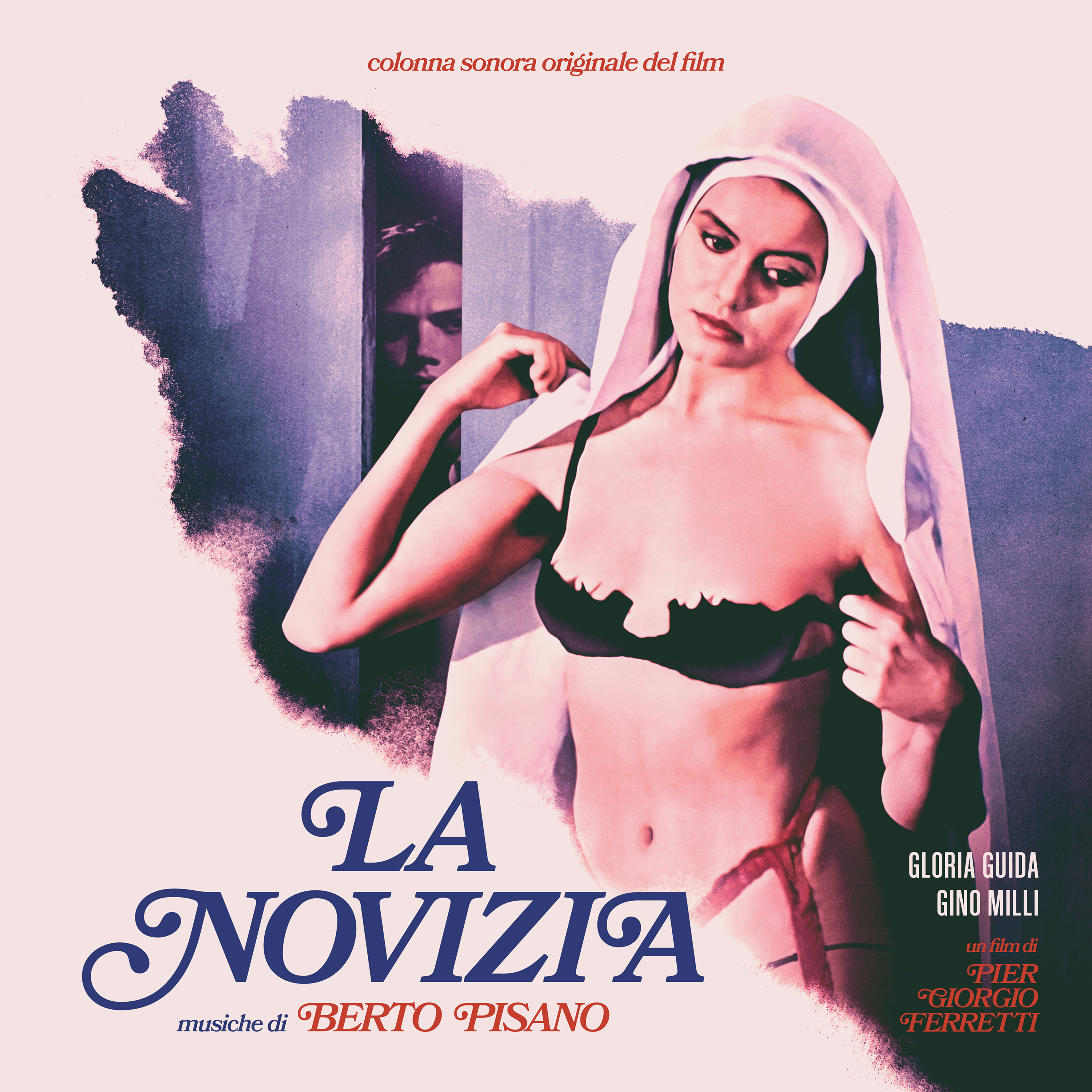
LA NOVIZIA LP
Oops, Four Flies did it again! Like other rare Italian gems, Berto Pisano’s La Novizia was long thought lost before the FF team rescued, restored and remastered it from the original tapes. And wow, it’s just one of the best things, if not the best thing, about the 1975 film it was written for – an erotic comedy with melodramatic overtones directed by Pisano’s long-time collaborator Giuliano Biagetti (they previously worked together on Interrabang and La Svergognata) and starring a young and mesmerizing Gloria Guida.The film’s low budget meant that Pisano had to make a virtue out of necessity. Rather than using a big orchestra and strings (as is well known, he was a brilliant conductor and string arranger), he relied on a smaller ensemble – almost a chamber ensemble, but with a jazz-like rhythm section – to create sensual late-night soundscapes that exude a downtempo ambience. In a nutshell: smooth, warm, velvety music. The epitome of the lounge sound.
At times, whispered, sexy vocals by (the then ubiquitous) Edda Dell’Orso float dreamily over brushed drums, bass, guitars and electric pianos. At others, we find Italian library heavyweights like Alessandro Alessandroni (whose unmistakable whistle can be heard in “Canto Notturno”) and even psychedelic rock influences, as in the acid distorted guitars, furious drums and crazy synths of “Free Dimension”. At yet other times, we’re taken into more easy-listening territory – “Fiore Rosso”, for instance, offers a wonderfully cinematic example of Mediterranean, rather than Brazilian, bossa nova (did they ever thought of using a spinet in Brazil??).
The secret to the charm of La Novizia is that it encapsulates the Italian erotic sound of the 70s in all of its nuances, from the morbid, to the prudish, to the naïve. Because yes, this is a record of nuance and musicianship. And while the themes are in themselves simple, the fantastic quality of the writing, arrangement and production is a testament to Berto Pisano’s superb talent, style and professionalism.
Finally back to life after decades of obscurity, La Novizia is a thing of beauty – which, as a pretty bright fellow once said, is a joy forever. Don’t miss out on joy.
Comes on vinyl, CD and Digital, with original artwork by Eric Adrian Lee and exclusive liner notes by the Pisano family. All tracks are previously unreleased in any format.
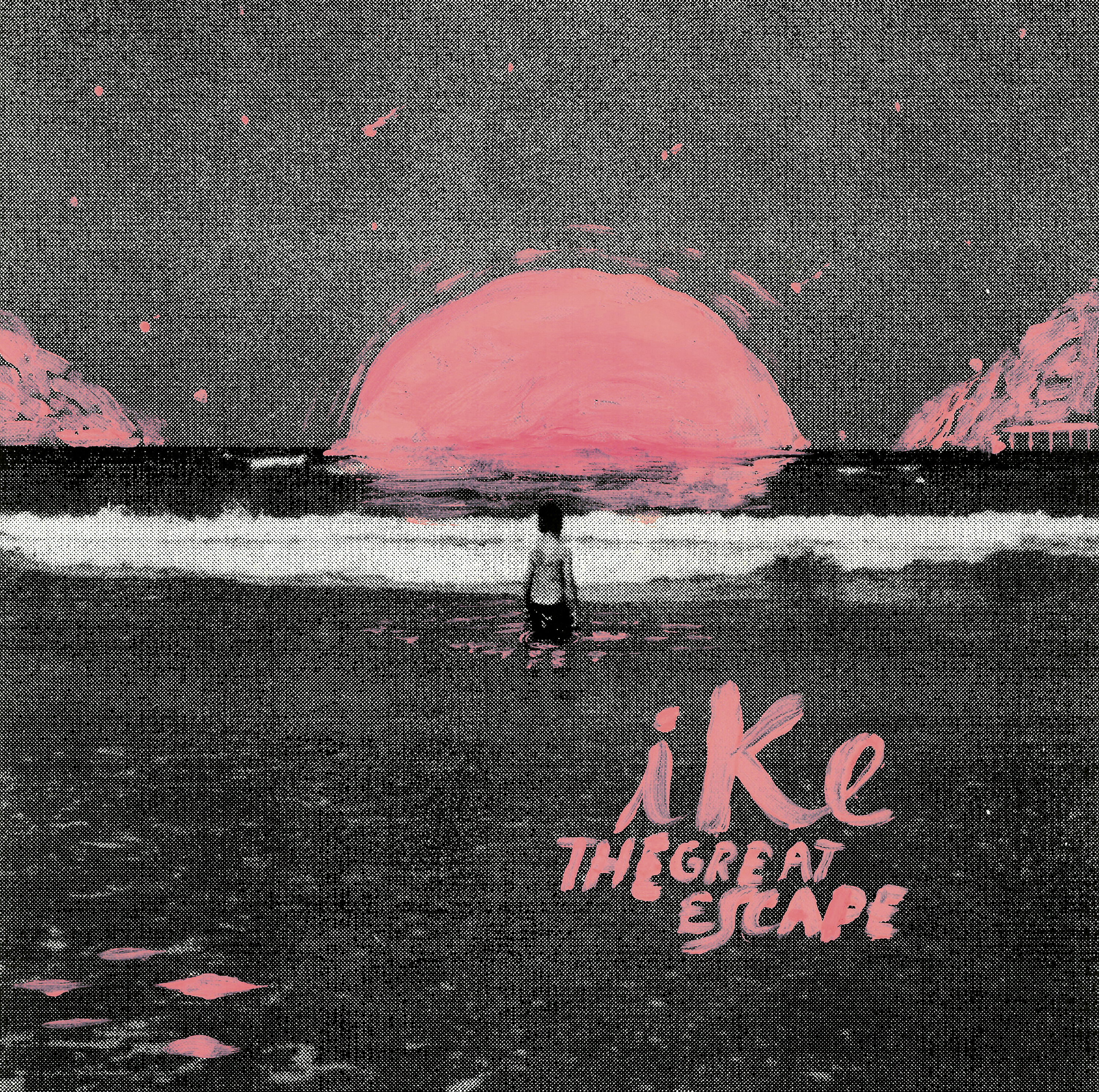
THE GREAT ESCAPE
The music of Isaac de Martin, aka IKE, blends jazz and electronic influences into warm, smooth, and often cinematic soundscapes. A certain eclecticism is not surprising considering that the Berlin-based composer, producer and guitarist was born in Italy into a musical family with British roots, studied classical guitar, graduated in jazz and went on to develop his personal style through creative experimentation, live touring and collaborative work with artists from a variety of disciplines and countries.
The Great Escape, his second album under the moniker IKE, is a collection of songs and instrumental pieces that have a common theme: the escape from – or possible antidotes to – our present techno-scientific society. It is an invitation to take courage, look into ourselves, and go back to our inner child, seen as the guardian of a world of freedom, imagination, spontaneity and natural rhythms.
The concept for the album first came to IKE in mid-2019, when he started collaborating with American singer-songwriter and actress Sera Kalo. Not only did Sera’s soulful melodies, powerful vocals and heart-felt lyrics beautifully complement IKE’s elegant nu jazz compositions, but the songs they penned together unlocked a specific creative vision. IKE went on to explore and capture it over the next year or so, getting on board great musicians from the US, UK, Scandinavia and, of course, Italy.
Recorded in various locations by IKE himself, the album was mixed by Nene Baratto at Big Snuff Studio, Berlin, and mastered by Fabrizio De Carolis at Reference Mastering Studio, Rome. The stunning artwork is by Italian graphic designer Franz Longhi, who, in line with the album’s concept, created an analog feel by hand painting on Xeroxed photographs.
PAESAGGI LP Limited Edition
Finally putting an end to a long wait for library music lovers, Four Flies Records is proud to present the first reissue of Piero Umiliani’s Paesaggi – a record that, despite remaining for many years pretty obscure compared to other titles in the maestro’s discography, is now regarded by collectors and experts as the gold standard in Italian library music.
Originally released in two versions with different sleeves, the first on Liuto Records in 1971 and the second on Ciak Record in 1980, the album features tracks composed by the maestro himself (under his alias Zalla) and performed by the legendary super-group of Italian session players I Marc 4, this time with Angelo Baroncini instead of Carlo Pes on guitars (which probably explains the name being spelled with a ‘k’ instead of a ‘c’ on the album cover).
The Italian word paesaggi means “landscapes”, and that is exactly what the music in the album has been designed to evoke – a journey of moods and emotions, through exotic and pastoral scenery, with loungey sounds that caress your ears like the song of an enchanted nightingale. Mysterious yet captivating soundscapes transport you to a faraway and peaceful place, possibly somewhere in rural Asia. While listening to the record, you’ll feel as if you are sitting under a pavilion, right in the middle of a tea plantation, enjoying a freshly brewed green tea and watching the calm sunset.
In addition, Paesaggi is paradigmatic of Italian library music and its genre-defying nature. By using a multitude of instruments, such as flute, vibraphone, harpsichord, sitar, gong and others, it brings together a variety of arrangements, styles, and genres spanning from bossa nova to jazz, easy listening to psychedelic, Latin, exotica, and many more.
Under Umiliani’s brilliant direction, the pianos and keyboard instruments of Antonello Vannucchi, the guitars of Angelo Baroncini, the bass of Maurizio Majorana, and the drums of Roberto Podio dance together and – enriched by other instruments played by top session musicians like Bruno Battisti D’Amario (sitar), Franco De Gemini (harmonica), or Franco Chiari (vibraphone)– create the sound that makes Paesaggi so unique.
With the honour of reissuing this masterpiece so many decades since its release comes a responsibility to do full justice to one of the greatest Italian composers of the 20th century and his now celebrated legacy. Four Flies have done their best to put out a record that replicates as closely as possible the value of the original as a cultural artefact, providing Italian library connoisseurs and novices alike with an exquisite sonic, and tactile, experience.
Paesaggi will be available in 3 different formats: Limited Edition Vinyl LP – 1971 album cover, thick tip-on sleeve, 700 copies only; Vinyl LP – 1980 album cover; First ever CD version – 1980 album cover.
PAESAGGI LP
Finally putting an end to a long wait for library music lovers, Four Flies Records is proud to present the first reissue of Piero Umiliani’s Paesaggi – a record that, despite remaining for many years pretty obscure compared to other titles in the maestro’s discography, is now regarded by collectors and experts as the gold standard in Italian library music.
Originally released in two versions with different sleeves, the first on Liuto Records in 1971 and the second on Ciak Record in 1980, the album features tracks composed by the maestro himself (under his alias Zalla) and performed by the legendary super-group of Italian session players I Marc 4, this time with Angelo Baroncini instead of Carlo Pes on guitars (which probably explains the name being spelled with a ‘k’ instead of a ‘c’ on the album cover).
The Italian word paesaggi means “landscapes”, and that is exactly what the music in the album has been designed to evoke – a journey of moods and emotions, through exotic and pastoral scenery, with loungey sounds that caress your ears like the song of an enchanted nightingale. Mysterious yet captivating
soundscapes transport you to a faraway and peaceful place, possibly somewhere in rural Asia. While listening to the record, you’ll feel as if you are sitting under a pavilion, right in the middle of a tea plantation, enjoying a freshly brewed green tea and watching the calm sunset.
In addition, Paesaggi is paradigmatic of Italian library music and its genre-defying nature. By using a multitude of instruments, such as flute, vibraphone, harpsichord, sitar, gong and others, it brings together a variety of arrangements, styles, and genres spanning from bossa nova to jazz, easy listening to psychedelic, Latin, exotica, and many more.
Under Umiliani’s brilliant direction, the pianos and keyboard instruments of Antonello Vannucchi, the guitars of Angelo Baroncini, the bass of Maurizio Majorana, and the drums of Roberto Podio dance together and – enriched by other instruments played by top session musicians like Bruno Battisti D’Amario (sitar), Franco De Gemini (harmonica), or Franco Chiari (vibraphone)– create the sound that makes Paesaggi so unique.
With the honour of reissuing this masterpiece so many decades since its release comes a responsibility to do full justice to one of the greatest Italian composers of the 20th century and his now celebrated legacy. Four Flies have done their best to put out a record that replicates as closely as possible the value of the original as a cultural artefact, providing Italian library connoisseurs and novices alike with an exquisite sonic, and tactile, experience.
Paesaggi will be available in 3 different formats: Limited Edition Vinyl LP – 1971 album cover, thick tip-on sleeve, 700 copies only; Vinyl LP – 1980 album cover; First ever CD version – 1980 album cover.
Moonbrew + Paolo Apollo Negri | The LEM Tales – Chapter One
Out on 28 January 2022
A1 Project Gemini
A2 Capsule Communicator
A3 EMU
B1 Saturn V
B2 Mercury Seven
B3 Tranquillity Base
Words have a force of their own: a life generated by their meaning and by the imaginary world they refer to; a power increased by the dynamic interplay with other words. Just put ‘Moon‘ and ‘Apollo‘ together, and you’ll be almost inevitably transported to mankind’s greatest adventure: the Moon landing and, before that, the space race between the US and USSR, the early missions, and the incredible technological challenges faced at the time by astronauts and engineers.
It is against this imaginative background that beat-maker and bass player Moonbrew and organist and keyboardist Paolo Apollo Negri conceived The LEM Tales project. Their collaboration, too, is the coming together of ‘Moon’ and ‘Apollo’, and of their two worlds: a sonic universe where hip hop meets funk, pop merges with jazz, old school interacts with new possibilities, and urban and space blend into something new.
The LEM Tales – Chapter One narrates the space race from the American point of view. This vinyl edition, which includes two exclusive tracks (*) not on the digital release, takes us on a journey from “Project Gemini” – NASA’s second human spaceflight program – to “Tranquillity Base” (*) (the site on the Moon where Armstrong and Aldrin landed and walked in July 1969) , through tracks titled “Capsule Communicator” (the individual in the mission control center who maintained communication with the astronauts in space), “EMU” (Extravehicular Mobility Unit, better known as the spacesuit), “Saturn V” (a threestage, liquid-fuelled rocket used between 1967 and 1973), and “Mercury Seven” (*) (the group of seven astronauts chosen for the Mercury Program in 1959).
Inspired by iconic images that are part of our collective visual memory, Moonbrew and Apollo’s first collaborative effort tries to provide a contemporary sonic representation of what the past means to us today – and, perhaps, will mean to future generations. It does so through a feast of vintage synthesizers, transistor and tonewheel organs, string machines, electric pianos, tube amplifiers, obscure analogue devices, electric bass, and modern samplers.
An old-school hip hop approach was used in the first stages of writing the album: individual drums hits from old, dusty records were first sampled and then physically played on real instruments to create patterns and build up the rhythm section. Moonbrew then laid down the electric bass grooves and Apollo layered his dreamy, evocative vintage keyboards on top. The result is a combination of different styles, sounds and genres that is fresh, original and contemporary while being clearly influenced by many musical legends of the past.
The LEM Tales – Chapter One is released by Four Flies in partnership with Record Kicks.
ITALIAN LIBRARY SONGBOOK VOL. 1
Out on 24 November 2021
A1 Jessica Duncan, Alessandro Alessandroni, pAd – Do You Wanna Get Close?
B1 Alessandro Alessandroni – Philadelphia
Four Flies’ new record series, ITALIAN LIBRARY SONGBOOK – Masters of Cinematic Music Reimagined into Song, hopes to build a bridge between the modern and the contemporary. Producers and songwriters from today’s music scene put their spin on hidden tracks and outtakes from the catalogues of Italian soundtrack maestros, reimagining them into new, previously unheard songs poised between pop and club culture – a sound nestled somewhere in between Balearic, downtempo, and organic grooves.
Volume I focuses on Alessandro Alessandroni, a composer whose trajectory is emblematic with respect to Four Flies’ journey as a label and publisher. Despite being best known in his lifetime for his unmistakable whistle in Ennio Morricone’s soundtracks for Sergio Leone’s spaghetti westerns, Alessandroni was way more than that. He was a refined composer and multi-instrumentalist, and one always ahead of his time. Partly thanks to Four Flies and its contribution to the rediscovery of the Maestro with releases such as the EP “Afro Discoteca” and the compilation album “Lost & Found”, this has become unquestionably clear in the past few years, which have seen his name climb to the top of collectors’ want lists and gain recognition in the international music industry.
This release goes back to one of Alessandroni’s lesser known film scores, Sangue di sbirro (written for Alfonso Brescia’s 1976 poliziottesco Cop’s Blood), where he created his own version of the soul-infused jazz-funk music typically found in 70s Blaxploitation movies.
More specifically, Neapolitan producer pAd and London singer-songwriter Jessica Duncan reimagine the original “Philadelphia”, which appears on Side B and whose title clearly refers to the city that, back in the 70s, saw the birth of (mellow) disco. The result of their collaboration is “Do You Wanna Get Close?” on Side A, a downtempo, jazz-funk and Balearic gem pervaded by warm, sexy and elegant pop-soul vibes that make it a perfect club track to enjoy the night until the early hours of the morning.
To ensure maximum audio quality, the mastering was done by Fabrizio De Carolis at his Reference Mastering studio in Rome’s Prati neighborhood (the same neighborhood that was once the epicenter of Roman library music) while the vinyl cut at the The Carvery, the multiple Grammy-nominated London studio behind some of the best organic grooves records of the past decade. The result is a deep, full, rich and three-dimensional sound that enhances the beauty of both tracks.
The series and volume artwork is by graphic designer and calligrapher Luca Barcellona, an artist used to working with analog tools such as ink, brushes and pencils. He drew inspiration from the world of literature, imagining each release as one of the volumes in an elegantly bound classics book series – an analogy that reminds us of the tactile element that makes vinyl records so unique and precious, while also suggesting the cultural value of a music that aims to connect the legacy of the past and the creativity of the present.
IL TEMPO DEGLI ASSASSINI
Between the 60s and 80s, Albert Verrecchia played a major role in Italian pop music and on the European disco and Afro-cosmic scene, both under his own name and under the monikers Albert Weyman and Albert Prince. He was the keyboardist of legendary Italian-French r’n’b band I Pyranas, served as a session Hammondist for singer and TV star Raffaella Carrà, and produced the disco trio Belle Epoque as well as the debut album of singer-songwriter Alan Sorrenti.
Among his many incarnations, in the early and mid-70s he also composed a few soundtracks for Italian genre cinema, including for movies such as the poliziottesco Roma drogata, la polizia non può intervenire (Hallucinating Trip, 1975, Lucio Marcaccini) and the erotic drama Tecnica di un amore (1972, Brunello Rondi).
The score he wrote in 1975 for Il tempo degli assassini (Season of Assassins, a film about a gang of criminal youths who terrorize the city of Rome in the already violent 70s) is certainly his most accomplished work in the genre.
Conceived for a small ensemble, it was written almost entirely on the spot in the recording studio. Verrecchia himself played the Moog, and his dynamic and percussive approach to the instrument resulted in a style midway between funk and proto-disco. A modern rhythmic style – or Ritmico Moderno, which is the title chosen by CAM for the LP containing the soundtrack and released two years later as part of a promotional library music series only distributed to film professionals and radio and TV programmers (CML series, cat. no. 131).
One is led to wonder whether it was thanks to that LP that, in 1977, three pieces from the soundtrack found their way into another film about youth gangs, the Spanish Perros callejeros (Street Warriors), written and directed by Jose Antonio de la Loma.
On a side but important note, there’s the added bonus of popular 70s and 80s entertainer Sammy Barbot singing on “Gang Leader” alongside female vocal group Baba Yaga.
What a pity that Verrecchia’s career as a film composer ended here!
The Rebel feat. Danno, Ice One & The Good People | REBEL MUSIC
Out on 8 October 2021
A1 The Rebel feat. Danno – Rebel Music
A2 The Rebel – Rebel Music (Instrumental)
A3 Danno – Rebel Music (Acapella)
B1 The Rebel feat. The Good People – Body Rockin’
B2 The Rebel feat. The Good People – Body Rockin’ (Ice One “Hip Hop Room Remix”)
B3 The Rebel – Body Rockin’ (Ice One “Hip Hop Room Remix”)
It’s been already 10 years since the first DJ’s Choice parties in basements and squatted social centers in Rome. Many things have changed, but the approach remains the same: using music as a form of expression and a means to affirm one’s identity.
RM stands for “Rebel Music” (i.e., music by DJ’s Choice founder The Rebel), but is also short for “Rome”, a city represented in track one by the ‘Jedi Master’ of Roman hip hop: Danno, from the pioneering underground crew Colle Der Fomento.
Also performing on The Rebel’s instrumental are New York hip hop duo The Good People in track two, ”Body Rockin”’, remixed by another Italian hip hop legend, Ice One.
Rome and New York are two worlds, two styles, but two sides of the same coin. Our Rebel Music brings them together as if they were two stops on the same subway line.
ITALIA: ULTIMO ATTO?
In 1977, in the midst of a period of political turmoil and social unrest that went down in Italian history as “years of lead”, screenwriter and director Massimo Pirri made a film no one else had the courage to make: Italia: ultimo atto? (Could It Happen Here?).Here, Pirri explores the controversial (and, in the 70s, very current) topic of left-wing armed struggle. He does so through a storyline that is almost prophetic: in the film, a mysterious ultra-leftwing armed group plans and executes the killing of the Ministry of the Interior; in 1978 Christian Democrat leader and former premier Aldo Moro was kidnapped and killed by the Marxist-Leninist Red Brigades).
The violence of Pirri’s storyline is fully captured by the score composed by Lallo Gori, who uses obscure synths, analog keyboards, and dry-sounding acoustic drums to create an extremely tense and frenzied soundscape of electronic textures.
The result is an album that combines dark, haunting jazz-funk with ambient atmospheres and suspenseful electronic sounds, and which ends up sounding like an instrumental proto-hip hop record where Moog synths take the lead together with drums.
At the time, this must have seemed like a low-budget, ramshackle soundtrack – essentially, a Bmovie soundtrack. Indeed, the extensive use of electronic sounds was meant to compensate for the lack of acoustic instruments, such as the bass or (alas!) brass, which were replaced by keyboards and MiniMoog synths.
Today, however, Lallo Gori’s odd and minimalistic style of arranging makes this score sound unexpected, avant-garde, and innovative. In short, modern and contemporary.
Previously unreleased in any format, all tracks have been remastered from the original master tapes.
SANGUE DI SBIRRO | pAd reworks
Out on 9 July 2021
A1 – Manhattan (Nightclub Version)
A2 – Manhattan (Daylight Version)
B1 – Philadelphia (Daylight Version)
B2 – Philadelphia (Nightclub Version)
The latest installment of Four Flies’ exclusive 12-inch vinyl series for DJs features Neapolitan-born producer pAd putting a dance-floor spin on “Manhattan” and “Philadelphia”, both from Alessandro Alessandroni’s soundtrack to Alfonso Brescia’s Sangue di Sbirro (aka Knell, Bloody Avenger, 1976), a pulp/noir score that perfectly embodies Alessandroni’s take on the Italian approach to blaxploitation (the main theme is clearly inspired by Isaac Hayes’s music for Shaft).
pAd gives each Alessandroni original the double treatment, with a “daylight” and a “nightclub” version. His daylight “Manhattan” combines disco-funk with elements of 80s electro, while his nightclub one is more openly nu-disco/nu-soul and incorporates hip-hop and jazz-funk sounds. In its turn, “Philadelphia” is reworked into a delicate, soulful downtempo track (nightclub), as well as into a dub/leftfield & slow funk version with a sprinkling of Arab influences (daylight).
pAd’s brilliant reworks fully respect the spirit of the originals while giving them new life in the present, where the music of a genius like Alessandroni is finally getting the recognition it deserves.
NELLA MISURA IN CUI
Previously unreleased
Back in 1979, Italian director Piero Vivarelli made Nella Misura In Cui, a delicious erotic-exotic flick about a middle-aged, leftwing filmmaker who, being also an inveterate playboy, steals his son’s girlfriend and takes her on a holiday in the Caribbean where, a few years earlier, he shot his breakthrough feature. In real life, Vivarelli’s breakthrough feature was Il Dio Serpente (1970), a film whose sexy scenes have glued generations of viewers to the screen (actress Nadia Cassini has a cult following of her own) and whose superb original soundtrack marked Augusto Martelli’s rise to fame.
Today, Four Flies Records is especially proud to present the first complete release of Martelli’s sultry soundtrack to Nella Misura In Cui, where he expanded the tropical-voodoo sound of his earlier score to incorporate elements from disco, soul, and funk – idioms that became popular over the nine years between Vivarelli’s two movies.
The soundtrack’s main theme, “The Joint”, will give you a perfect taste of Martelli’s late-seventies sound: hippie lounge/beach vibes combined with a sort of flirting with the myths of youth culture, from free love to Third World utopias, to soft drugs. The album also features vocal and instrumental mixes of “Joining Together”, an infectious dance-floor banger driven by a powerful rhythm section (percussion played on the upbeat, Tullio De Piscopo doing his magic on drums, and Pino Presti providing a killer bass line) and with airy string textures you wouldn’t expect to hear in a disco track.
A super-groovy and soulful masterpiece from one of the standard bearers of erotic-exotic film music, Nella Misura In Cui is one of Four Flies’ most exciting finds to date. You need this!
MY LAST ALBUM
★ Previously unreleased tracks by the super talented US producer BARTON THINK
★ Out on 18 JUNE 2021
TRACKLIST
A1 – Dreamin’ (Intro)
A2 – Beautiful Place – Feat. Colonel Red & Dynamite MC
A3 – In The Dark (Winter) – Feat. Denitia
A4 – Everything I Need – Feat. Dynamite MC
A5 – Umatilla
A6 – Voices – Feat. Colonel Red
B1 – The Big Thing (Interlude)
B2 – Inuit Sunset – Feat. Monk
B3 – I Can’t See
B4 – Human Family – Maya Angelou Tribute
B5 – Grey And Green
B6 – You (Rework) – Feat. Christopher Ghidoni
B7 – Another Soft Message – Feat. Krystal Hardwick
For months now, Time Is The Enemy has been on the trail of enigmatic artist Barton Think.
Apparently he has been around the music business for decades, but oddly enough, he has left only a few traces of his presence. Like a skilled alchemist, Barton Think combines soulful beats and jazzy downtempo into a unique sound that takes those genres into bold new territories.
They Say:
“We discovered this enigmatic producer from Austin, Texas, through intensive digging and thanks to helpful advice from Colonel Red – an old friend of Jazz:Re:Found and one of the most appreciated voices in the UK.
Barton Think’s identity is still unclear, but this bizarre producer has an incredible music knowledge, as the unreleased gems that we unearthed clearly show.
We found some interesting sources within the Reddit community. Everything remains shrouded in mystery, but we believe Barton Think will be a really crazy and compelling story to delve into.”
Denis Longhi (Art Director)
“I think this record perfectly represents the soul of both Time is The Enemy and the Jazz:Re:Found festival. It’s not an avant-garde record, and Barton Think is not a child of the times. Rather, he is a father of the times; an artist who doesn’t need special effects to amaze the listener and doesn’t follow the fashions of the day. His fascinating music, at once retro and visionary, makes him an artist worth discovering and exploring, including with regard to the mystery of his identity.”
Khalab (Producer)
UFO BAR
More a family than a band, BANDA MAJE formed in a home studio in the historic district of Salerno, in Southern Italy, on the initiative of Peppe Maiellano (composer and keyboards) and Tonico Settanta (producer, rapper and DJ). The collective has an ever-changing number of members, all of whom – a bit like the lively port city they are from – exist at the crossroads between Italian melodies and imported genres like funk, soul and disco.
Released by Four Flies Records, a label specializing in vintage Italian soundtracks and brand new productions with a strong cinematic feel, Banda Maje’s debut album “Ufo Bar” transports you to an imagined version of Salerno that combines local tradition and 70s pop and film culture.
Listening to the album’s eight funk- and soul- infused tracks also means seeing stories unfold in the streets of this re-imagined city: from the jubilant uprising organised by the women from the Rione Fornelle neighborhood in “Fornellesse”, to the cigarette smuggling story in “P’ ciel, p’ mar, p’ terr”; from the distinctly southern Italian pucundria (bittersweet melancholy) in “Sunday Embarcadero”, to the saga of provincial nightlife in “Living Disco Club”.
While the LP’s Side A is sunny and cheerful, its Side B is more nostalgic, almost nocturnal, with bittersweet vibes in “2010” and new wave-influenced synths in “Ago”. This variety of moods reflects the emotional depth behind the music of Banda Maje: “We want to leave a trace of what we experience: the narrow little streets brimming with life; our love for Neapolitan music, for Italian soundtracks from the 70s, for B-movies and the saga of cigarette smugglers; our passion for vinyls and cassette mixtapes, not to mention second-hand love affairs and dusty afternoons spent watching third-division football.”
BANDA MAJE
Drums: Giuseppe “Flippettone” Limpido
Bass: Giuseppe ” ‘o Latt’ ” Desiderio
Keys: Peppe Maiellano
Electric guitar & bouzouki: Antonio D’Apolito
Rap: Tonico Settanta
Percussions: Francesco Fasanaro
Tenor sax: Antonio Di Filippo
Flute: Francesco Cirillo
Chorus: Angelica Cascone
Chorus & additional keys: Carmelo D’Amato
IL VUOTO
Four Flies is proud and excited to present the first full-album release of the long-forgotten soundtrack composed by Armando Trovajoli for Piero Vivarelli’s 1964 movie Il Vuoto.
Rightly considered by many to be a key figure, if not the key figure, in the history of Italian jazz, Trovajoli was responsible for fostering an appreciation and understanding of jazz among the generation of music listeners and musicians raised under Mussolini and Fascist nationalism. His outstanding work as a pianist, composer and conductor contributed immensely to the popularization of the genre among the general public and to the reduction of institutional bias against it.
The collaboration between Trovajoli and Vivarelli did not happen by chance. The latter, now regarded as one of Italy’s “kings of the B’s” for his work in the ‘exotic-erotic’ genre (Il dio serpente, Codice d’amore orientale, etc.), was a great music expert, a skilled talent scout for the Italian music industry, and a true lover of jazz.
Most of Trovajoli’s score for Il vuoto has a refined smoothness that is clearly reminiscent of cool jazz – many tracks on the soundtrack are performed by a sextet featuring Trovajoli himself on piano, Carlo Zoffoli on vibraphone, Berto Pisano on double bass, Gino Marinacci on baritone sax and flute, Enzo Grillini on electric guitar, and Sergio Conti on drums and percussion. At the same time, Trovajoli explores other jazz styles or sub-styles in faster, more rhythm-oriented tracks influenced by bossa nova, samba, and even rock’n’roll, where instruments like drums and percussion, electric guitar, or flute take center stage.
This stylistic variety demonstrates both the maestro’s versatility as a composer and the fine skills of the musicians who performed on the soundtrack. Like Trovajoli, they were all pioneers of Italian jazz and played in Italy’s very first ‘institutional’ jazz orchestra: the Orchestra di Musica Leggera of the RAI (the Italian public broadcasting company), formed under Trovajoli’s leadership in 1956 and credited as “his orchestra” in public performances and in the album The Beat Generation (RCA Italiana, 1960).
By making available for the first time ever almost all of the music recorded by Trovajoli for Il vuoto, this LP fills an important gap in the maestro’s discography. Most importantly, it offers further insight not only into the history of Italian jazz, but also into the penetration of the genre into Italian film music, which was possible thanks to Trovajoli’s mastery as a composer and to the virtuosity of the pioneering musicians who performed in his orchestra.
MAGICAL
★ A CAPTIVATING DEBUT
★ AN ARTIST TO WATCH
★ Out on 16 APRIL 2021
A1 – I COULDN’T KNOW
A2 – THOUGHT OF YOU
A3 – PAD THAI
A4 – JOY
B1 – LYN
B2 – DARKSIDEBRIGHTSIDE
B3 – DEEP WORDS
B4 – MAGICAL
Born in the Po Valley (northern Italy) in the late nineties, from a very young age Ze attracted the attention of promoters and artistic directors operating in the contemporary jazz and electronic music scenes. JazzMi and Jazz:Re:Found, two of Italy’s most influential festivals focussing on new avant-garde artists, immediately understood the potential of his amazing talent, showcasing him in their lineup. Jazz:Re:Found eventually decided to reward Ze’s genius by inaugurating the catalog of their new label Time is The Enemy with his debut album.